

1. Introduction
Metal-Air Batteries are among the most promising next-generation electrochemical energy storage technologies due to their exceptionally high theoretical energy density and lightweight design.
Unlike conventional batteries that contain both electrodes internally, metal-air batteries utilize oxygen from the surrounding atmosphere as the cathode reactant, reducing the amount of active material required inside the cell.
Today, metal-air batteries are widely studied in university laboratories, national research institutes, and industrial R&D centers for applications ranging from portable electronics to long-duration energy storage.
2. What Is a Metal-Air Battery?
A metal-air battery is an electrochemical cell that converts chemical energy into electrical energy through the oxidation of a metal anode and the reduction of oxygen from the surrounding air.
Unlike lithium-ion batteries, which contain both cathode and anode materials inside the cell, metal-air batteries continuously draw oxygen from the atmosphere through an air electrode. This unique design enables significantly higher theoretical energy density while reducing battery weight.
Common metal-air battery systems include:
- Zinc-Air Battery
- Aluminum-Air Battery
- Iron-Air Battery
- Lithium-Air Battery
Among them, zinc-air batteries are currently the most mature and widely researched technology.
3. How Does a Metal-Air Battery Work?
A typical laboratory metal-air battery consists of five key components:
- Metal Anode
- Air Electrode
- Electrolyte
- Current Collector
- Gas Diffusion Membrane
During discharge:
- The metal anode is oxidized.
- Electrons travel through the external circuit.
- Oxygen diffuses through the gas diffusion membrane.
- Oxygen reaches the air electrode and undergoes the Oxygen Reduction Reaction (ORR).
- Hydroxide ions migrate through the electrolyte, completing the electrochemical circuit.
For rechargeable metal-air batteries, the Oxygen Evolution Reaction (OER) occurs during charging.
4. Types of Metal-Air Batteries
| Battery | Advantages | Typical Research |
|---|---|---|
| Zinc-Air | Mature, safe, low cost | ORR/OER, catalyst development |
| Aluminum-Air | Extremely high capacity | Emergency power |
| Iron-Air | Low material cost | Grid-scale energy storage |
| Lithium-Air | Highest theoretical energy density | Fundamental research |
5. Why Are Metal-Air Batteries Important?
Metal-air batteries offer several advantages over many conventional battery technologies:
High Energy Density
Because oxygen is supplied directly from ambient air, more internal volume can be dedicated to the metal anode.
Lightweight Structure
Without storing cathode active materials inside the battery, overall system weight can be reduced.
Cost Efficiency
Many systems use inexpensive metals such as zinc or iron.
Sustainable Development
Several metal-air chemistries use aqueous electrolytes and recyclable materials.
6. Choosing a Metal-Air Battery Testing Cell
When selecting a laboratory testing cell, researchers should consider several factors:
Transparency
A transparent cell body allows easy observation of electrode placement and electrolyte distribution.
Modular Structure
Replaceable components simplify comparative studies using different electrodes, catalysts, or membranes.
Reliable Sealing
A dependable sealing structure minimizes electrolyte leakage and improves experimental repeatability.
Reusability
Reusable testing cells reduce laboratory costs while increasing experimental efficiency.
7. Recommended Product
StonyLab Metal-Air Battery Testing Cell Kit
The StonyLab Metal-Air Battery Testing Cell Kit is designed specifically for laboratory-scale metal-air battery research.
Its transparent acrylic construction allows researchers to monitor the internal structure during assembly and testing. The modular design enables quick replacement of electrodes, gas diffusion membranes, current collectors, and electrolytes for flexible experimental configurations.
Key Features
- Transparent acrylic electrolyzer cells
- Modular and reusable design
- Reliable sealing structure
- Efficient gas diffusion pathways
- Easy assembly and maintenance
- Suitable for zinc-air and other metal-air battery research
Typical Applications Include:
- Zinc-air battery development
- ORR/OER catalyst screening
- Air electrode optimization
- Gas diffusion layer evaluation
- Electrochemical performance testing
8. Assembly Guide
- Install the four screws into the acrylic electrolyzer cell.
- Position the hydrophobic gas diffusion membrane over the gas port.
- Install the silicone gasket and foam nickel current collector.
- Place the flow-channel acrylic electrolyzer cell, followed by another silicone gasket and the zinc electrode.
- Install the top acrylic electrolyzer cell and tighten the screw kit evenly.
9. Maintenance Tips
To maintain consistent testing performance:
- Clean all acrylic components after each experiment.
- Inspect the gas diffusion membrane for contamination or damage.
- Replace silicone gaskets if sealing performance decreases.
- Avoid overtightening screws to prevent acrylic deformation.
- Store all components in a clean, dry environment.
10. Frequently Asked Questions
Can this testing cell be reused?
Yes. The modular acrylic design allows repeated assembly, cleaning, and reuse.
Which battery systems is it compatible with?
It is primarily designed for zinc-air battery research but can also support other laboratory metal-air battery configurations.
Can I replace the electrodes or membranes?
Yes. The modular structure allows individual components to be replaced for comparative experiments.
Related Products:
Metal-Air Battery Testing Cell Kit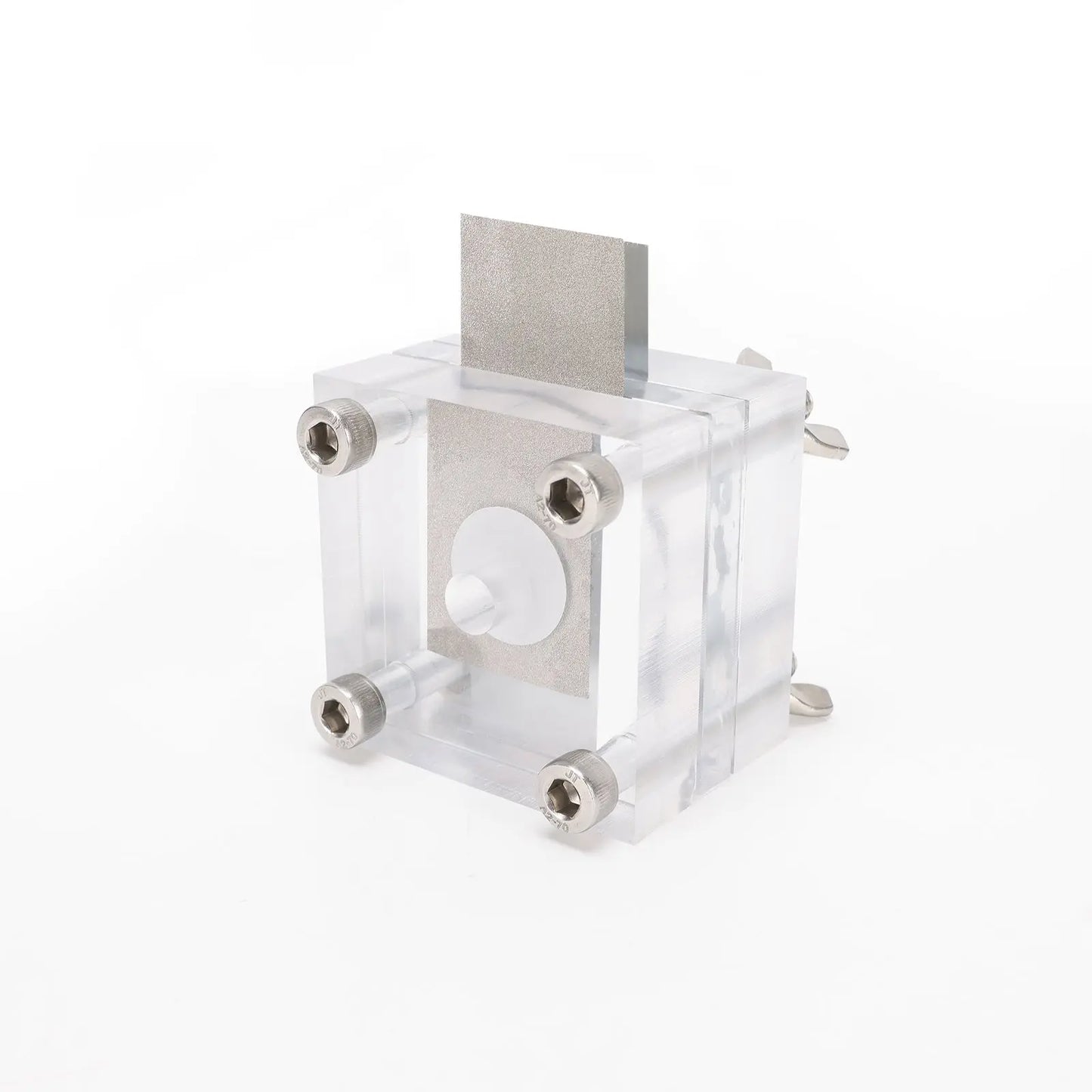 |
```